


Key Takeaways
- CNC stone carving delivers speed, repeatability, and precision that make it ideal for complex architectural elements, large series work, and intricate geometric designs across natural stones like limestone, marble, and granite.
- Traditional hand carving excels at one-of-a-kind sculpture, nuanced surface modeling, and restoration projects where historic tool marks and a personal touch matter most.
- Most high-level projects today use a hybrid approach-CNC machines handle roughing and geometry while master carvers refine surfaces for authenticity and character.
- The best choice between CNC and hand carving depends on the project’s priorities and goals, including budget, schedule, design complexity, and material selection.
- Engage your stone fabricator early. Decisions about carving method, stone sourcing, and jointing strategy should happen during schematic design, not after drawings are finalized.
Introduction: Why the CNC vs. Hand Carving Decision Matters
Stone carving has been practiced for thousands of years, shaping everything from Egyptian temples to the Gothic cathedrals that still define European skylines. Today, architects, conservators, and building owners face a question their predecessors never had to ask: should carved limestone facades, marble altar rails, or granite public monuments be shaped by CNC machines, by hand, or by some combination of both?
Each method provides distinct strengths in terms of production suitability and artistic flexibility. With the global stone market expected to exceed $100 billion by 2028, the stakes behind this decision continue to grow. Quarra Stone works at the intersection of tradition and modern technology, using both traditional techniques and digitally driven fabrication to deliver complex architectural stone across North America.
This article gives project stakeholders-architects, designers, owners, and fabricators-a clear framework for deciding when CNC, hand carving, or a hybrid workflow is the right fit. Let’s explore the history, the process, and the practical trade-offs that should guide your next stone project.
Stone Carving in Context: From Chisels to CNC
Throughout human history, the ability to sculpt stone has been an essential part of architecture and art. Ancient civilizations shaped the Parthenon in Athens and the great temples of Egypt using nothing more than hand tools, raw stone, and hard work spanning years or decades. This ancient craft depended on multi-year apprenticeships and guild systems where craftsmen developed a deep understanding of material, grain, and form.
Traditional stone carving tools include chisels and hammers-often forged from steel-along with mallets, rasps, and abrasives like sandpaper. For the softest natural stones, remarkably, soft stones can be carved with found items like fingernails. At the other end of the spectrum, granite requires tungsten carbide-tipped tools for carving, demanding far more effort and the right equipment.
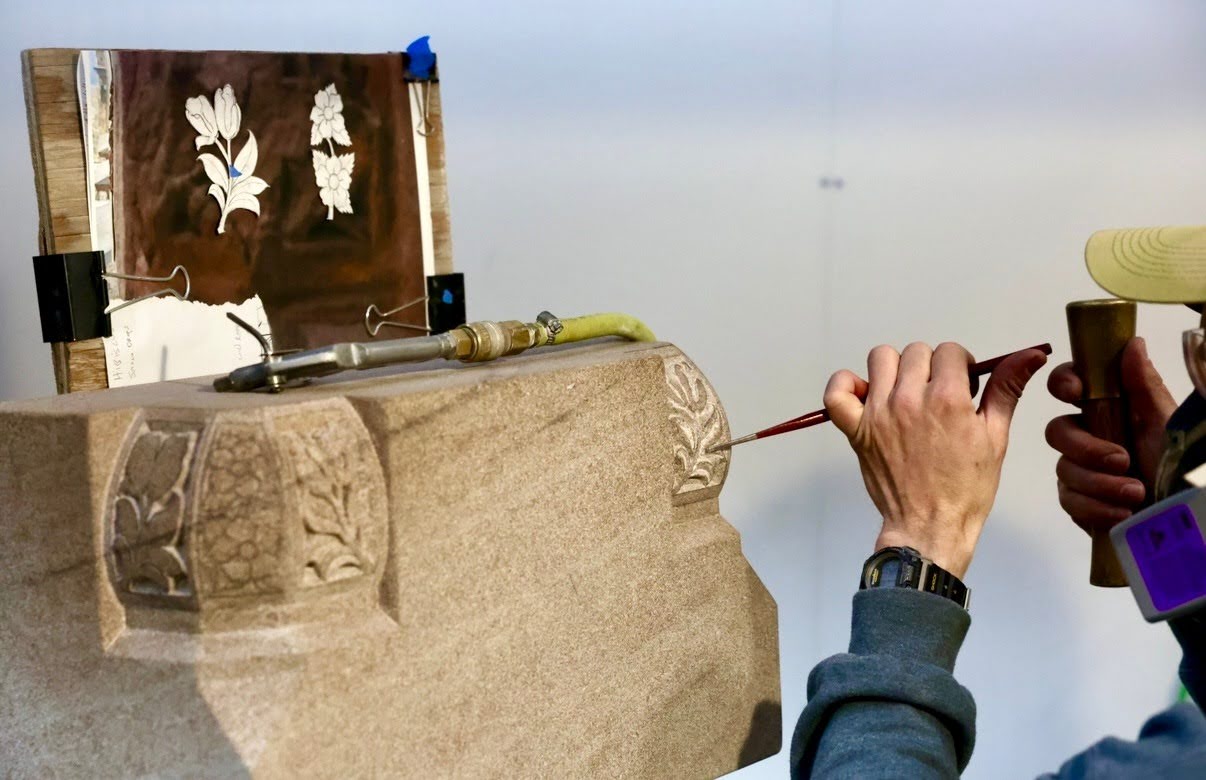
The 20th century introduced modern tools that accelerated the carving process. Pneumatic hammers increase the speed of stone shaping, and power tools like angle grinders and diamond blades opened new possibilities for roughing. Yet finishing work remained in the hands of artisans. Then, in the late 1990s and early 2000s, CNC machines and 3D scanning arrived in architectural stone shops, fundamentally shifting expectations for precision and repetition-and setting up the core contrast between centuries of hand-driven craft and the last few decades of digitally driven fabrication.
How CNC Stone Carving Works in Practice
CNC stone carving automates the sculpting process by moving diamond-tipped tools along programmed paths to remove material from blocks of limestone, marble, or granite. CNC machines utilize CAD/CAM files to carve out identical symmetrical designs with micron-level accuracy, producing very consistent surfaces and crisp geometry compared to hand carving.
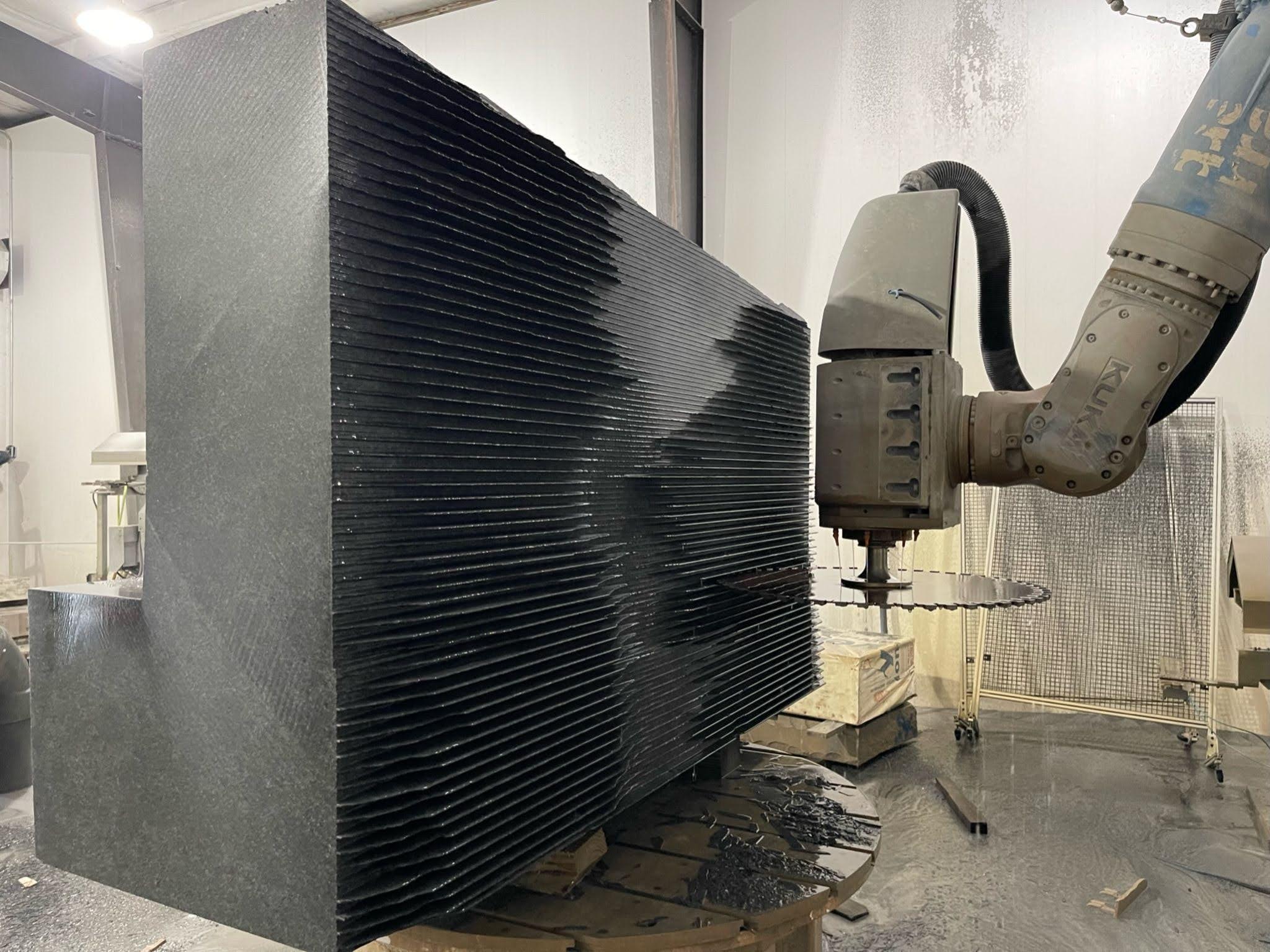
The typical workflow starts with 3D scanning or CAD modeling, followed by CAM programming of toolpaths where operators specify feed rates, spindle speeds, and tool selection. The raw stone is fixed on the machine bed, and the machine executes roughing passes to remove bulk material, then finer finishing passes to approach final dimensions. Diamond tools are essential for carving natural stone at every stage.
Common machine types include 3-axis equipment (in sizes like 1325 and 1530) for relief carvings, panels, and lettering, and 5-axis CNC machines that allow carving from multiple angles, making them indispensable for full 3D capitals, statues, and complex tracery. Spindle power determines the hardness of stone that can be carved; harder stone, like granite or quartzite, demands robust spindles of 7+ kW. CNC machines can handle various stone types with different hardness levels and can carve complex 3D sculptures that would take many times longer by hand.
CNC machining is well-suited for intricate geometric designs and large production volumes. It drastically cuts down the labor-intensive hours required to shape hard stones, with industry data showing roughly 8–20 hours per square meter of moderately complex relief versus 40–120 hours by hand. CNC stone carving can significantly reduce production time, and CNC technology can handle complex designs efficiently, but it still requires skilled programmers to manage complex machine setup and G-code, and CNC systems require high initial investments for machinery and software, sometimes $100,000–$500,000+ for 5-axis configurations.
Modern tools now extend beyond the machines themselves to include AI-driven design software and eco-friendly lasers that further streamline the process. Rotary tools and specialized bits round out the arsenal. But no matter how advanced the technology, CNC still relies on experienced fabricators who understand how different stone carving tools behave in various stone types.
How Traditional Hand Carving Works
Picture a sculptor standing at a banker-a sturdy carving bench-working directly in raw stone, guided by full-size drawings, templates, or clay and wood maquettes. Traditional hand carving emphasizes patience and skill, and the carving process unfolds through deliberate stages of manual work.
The core stone carving tools include mallets and masonry chisels (point, tooth, and flat varieties), rifflers, rasps, and the pitching tool used for shaping edges and rustic surfaces. Each tool shapes the stone in distinct ways: a point chisel roughs the general shape, tooth chisels model curvature, flat chisels refine planes, and polishing with abrasives brings surfaces to their intended finish. A skilled stone carver can physically feel the density of the stone to adjust techniques mid-stroke, listening to the sound of the hammer, sensing vibration, and reading the grain, bedding planes, and veining in real time.
This tactile feedback loop is what sets hand carving apart. Hand carving allows the artist to avoid hidden flaws or fractures when working with stone, adapting the approach on the fly when an unexpected inclusion or vein appears. The result: hand carving results in natural variations and human touch, making no two pieces identical. Those subtle tool marks and micro-variations are what many clients, especially in restoration of pre-20th-century architecture, associate with authenticity and timeless beauty.
Traditional techniques progress from roughing down the block to establishing main forms, then slowly refining surfaces and crisping intricate details such as acanthus leaves, foliation, or figural features. For sculptors and contemporary artists working in stone, this process is inseparable from the art itself-a direct conversation between the carver and the material.
CNC vs. Hand Carving: Key Differences That Affect Your Project
When weighing CNC against hand carving for a specific project, several practical criteria shape the decision. Understanding these differences early helps architects and designers avoid costly mid-course corrections.
Accuracy and repeatability. CNC machines can produce consistent results across multiple pieces, reproducing a digital model within fractions of a millimeter (typically 0.1–0.3 mm) across hundreds of units. Hand carving, though precise in skilled hands (roughly 0.5–2 mm tolerance), introduces slight variation piece to piece. CNC machining offers unmatched precision, speed, and repeatability for bulk production or complex geometry.
Speed and lead time. CNC dramatically compresses production time for large quantities. CNC machining is ideal for large architectural features or repetitive elements-think of a university facade requiring dozens of matching capitals. Fully hand-carved production for the same scope can extend schedules by a factor of three to five. CNC machines are often used for roughing out material before hand-finishing by artisans, combining the strengths of both.
Cost implications. Hand carving is typically lower in initial costs but is more time-intensive and higher in labor costs, with estimates suggesting hand carving runs 3–5× the cost of CNC for comparable scope on repeating elements. For a one-off sculpture or small repair piece, hand carving may still be the more economical path because no programming or machine setup is needed.
Aesthetic and philosophical differences. CNC tends toward cleaner, machine-smooth surfaces unless intentionally distressed, while hand carving foregrounds the artisan’s gestures and the tradition of historic stone carving. How visible the detail is, viewing distance, lighting, interior versus exterior, should influence whether the personal touch of hand finishing is perceivable or necessary.
Material Selection, Scale, and Design Complexity
The “right” method depends heavily on stone type, project scale, and geometric complexity, not just on budget or philosophy.
Softer stones like limestone and marble are more forgiving for both CNC and hand carving, allowing finer detail and quicker finishing. Soft stones can be carved with simple tools, making them accessible even for smaller-scale commissions. Denser, harder stone like granite demands robust modern techniques and heavy-duty machines with powerful spindles; CNC machining drastically cuts down the labor-intensive hours required to shape these materials compared to purely manual work.
Large-scale projects-full facades on university residence halls, civic buildings, commercial towers-benefit from CNC because hundreds of matching units can be carved consistently from selected beds of stone. CNC machines can handle complex architectural details and highly intricate parametric patterns, deep undercuts, and free-form 3D geometries that modern architecture increasingly demands.
Contrast this with conservation work or small liturgical commissions, where matching a single 1880s capital requires hand carving to align color, texture, and tool marks with surviving historic fabric. In these cases, the carver’s ability to read and respond to the stone is irreplaceable-an essential skill that no amount of programming can fully replicate.
The Hybrid Approach: Blending CNC Precision with Hand-Carved Nuance
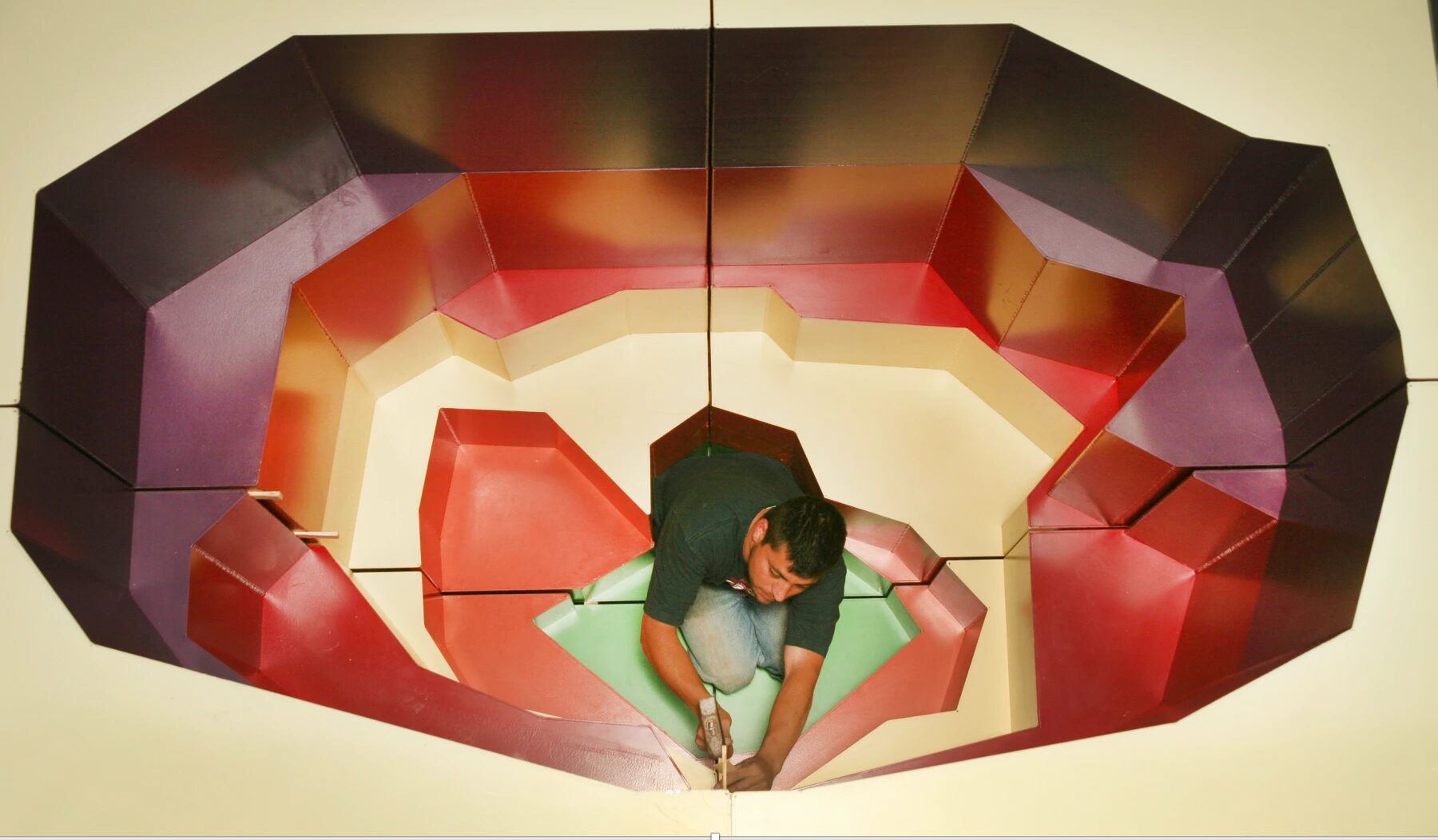
High-end stone fabricators, including Quarra Stone, often use both CNC and hand carving methods together rather than choosing one or the other. A hybrid approach combines CNC roughing with hand-finishing for efficiency and craftsmanship, and it has become the standard for complex architectural and restoration work since roughly 2010.
In a typical hybrid workflow, CNC machines rough out the architectural or sculptural form to within a few millimeters of finish size, handling the heavy stock removal that would otherwise consume weeks of hard work. Modern techniques in programming optimize toolpaths to minimize waste and micro-fracturing. Then the piece moves to master carvers, who sharpen profiles, enrich ornament, add surface texture, and break the “machine-perfect” look with deliberate tool marks.
This approach serves a wide range of project types: university academic quads requiring dozens of carved panels, cathedral restorations like the Carmelite monastery in Wyoming that blend CNC limestone carving with hand finishing, and contemporary civic memorials where artists often blend traditional and modern carving techniques to create something entirely new. Benefits include controlled budgets and schedules, faithful reproduction of complex digital ideas, and final surfaces that still read as authentically hand-worked. Hybrid methods also allow easier iteration: design adjustments happen digitally, but the last layer of character always returns to the carver’s hands, preserving craftsmanship at every stage.
How to Choose the Right Method for Your Stone Project
If you are an architect, owner, or artist planning a specific stone project, start by clarifying your priorities. Is historical fidelity essential? Is a tight budget or an aggressive schedule the driving constraint? Are you pursuing experimental geometry or restoring something that has stood for a century?
Here is some general guidance by project type:
- Commemorative plaques, lettering, and small statues can be hand-carved or hybrid, depending on quantity and complexity.
- Large institutional facades and repetitive ornament tend to favor CNC plus hand finishing for both cost and quality control.
- Meticulous restoration often leans toward predominantly handwork to match surviving historic fabric.
- Contemporary sculpture and parametric design may use CNC for the geometry, with sculptors refining the finished surfaces.
Early collaboration matters. Involve a stone fabricator like Quarra Stone during schematic or design development so that material selection, jointing, stone block sizes, anchoring, and carving strategy are aligned from the start. Good project management at this stage prevents schedule surprises later.
You do not need to choose alone. Experienced shops can evaluate drawings, 3D models, and raw stone samples to propose the most efficient mix of modern tools and traditional techniques, so your project achieves the quality, precision, and character it deserves.
Final Thoughts
Stone carving sits at a remarkable crossroads. The world of architecture and sculpture now has access to machines, software, and digital workflows that would have been unimaginable to the craftsmen who built the great cathedrals. Yet the tradition of the carver’s hand-reading grain, shaping form, leaving a mark that says a human being was here, remains as relevant as ever.
Whether your next commission calls for the repeatable precision of CNC, the irreplaceable personal touch of hand carving, or a thoughtful hybrid of both, the answer lies in matching method to purpose. The company you partner with should understand both worlds deeply enough to recommend and execute the right strategy.
Reach out to Quarra Stone early in your design process to explore which carving approach will deliver the timelines, cost efficiency, and artistic integrity your project demands.

FAQ: Common Questions About CNC vs. Hand-Carved Stone
Below are answers to practical concerns that frequently come up when stakeholders are evaluating stone carving methods.
Is CNC-carved stone as durable as hand-carved stone?
Durability is determined almost entirely by stone quality, quarrying practices, and installation, not by whether the carving was done by CNC or by hand. Both methods use the same raw stone, and when fabricated and installed correctly, service life is measured in decades or centuries. CNC may slightly reduce micro-fracturing risk during roughing because toolpaths can be optimized for the stone’s properties, but proper technique in either method yields robust results. The critical factors are stone selection, sealing, and anchoring, not the carving method itself.
Will reviewers or preservation boards accept CNC work on historic buildings?
Many historic preservation commissions across the United States have already approved hybrid CNC and hand-carved work for restorations since the early 2000s. Their primary concern is visual and material compatibility: matching color, texture, profile, and tool marks with surviving historic fabric. Present mockups showing both CNC-roughed and hand-finished surfaces, along with documentation of stone sourcing and carving methods, to support approvals. When the finished surface is indistinguishable from original hand carving, the method of roughing is rarely an issue.
How early should I decide between CNC and hand carving in my project?
The decision should ideally be made during schematic or early design development, before finalizing profiles, joint layouts, and budgets. Early choice of method informs material selection, stone block sizes, anchoring details, and how digital models are prepared for fabrication. Engaging Quarra Stone at the concept stage lets the team review drawings and 3D files so that carving strategy, schedules, and cost estimates are realistic from the outset-avoiding redesign costs downstream.
Can CNC capture the subtle expressions and folds in figurative sculpture?
High-resolution 3D scanning and 5-axis CNC machines can reproduce extremely fine geometry, including faces, drapery folds, and ornamental foliage. CNC machines can carve complex shapes automatically with remarkable fidelity to a scanned model. However, most sculptors and fabricators still prefer a sculptor or carver to refine eyes, mouths, and delicate transitions by hand to avoid a “cold” or overly mechanical appearance. The common workflow involves scanning a clay or plaster model, milling in stone, then spending additional studio time on hand finishing to restore subtle character and artistic expression.
Does using CNC reduce the level of craftsmanship in a project?
CNC is a tool, not a replacement for craft. It shifts some expertise into digital modeling, machine programming, and material strategy while still requiring skilled carvers for finishing. Many of today’s most respected architectural and liturgical projects rely on CNC for efficiency and on master artisans for artistic judgment and final detailing. When thoughtfully integrated, modern technology actually expands what craftsmen can achieve in stone carving rather than diminishing their role, freeing them to focus on the refinement and detail where human skill matters most.
