

Key Takeways
- Digital fabrication stone work combines 3D scanning, CAD/BIM, CAM, and CNC machine tools to turn raw stone into precise architectural parts.
- Quarra Stone, a Sun Prairie, Wisconsin company, has invested in digital technology since the early 2000s, including robotic stone milling, noted by Wisconsin Public Radio.
- Digital workflows reduce waste, labor, RFIs, and time, while skilled hands still refine finishes, assembly, and life-like detail.
- Architects, owners, and partners gain clearer mockups, dry-fits, and data-rich approvals in the digital age.
From Chisels to Code: A Short History of Digital Stone Fabrication
Historic Wisconsin courthouses, churches, and university buildings were built with chisels, templates, and patient craft. Today, the same craft lives inside the computer, CNC router, bridge saw, water jet, and robot. Since 2004, Quarra has used robotics to transform heavy blocks into a refined form without losing the involvement of the human eye.
Core Digital Technologies in Stone Fabrication
Digital data moves from point clouds to CAD models to G-code, the machine language that tells tools where to cut. Digital fabrication in stone utilizes computational design and computer-controlled machinery to create precise physical stone elements. Stone is often unpredictable, with hidden fissures and uneven density that can create challenges in traditional CNC programming, so experience is essential.
CNC Routers, Saws, and Waterjets
Bridge saws handle straight and mitered cuts; CNC routers make profiles, relief, engraving, and sculptural surfaces; high-pressure abrasive waterjets handle intricate cold-cutting. Multi-axis CNC routers combined with high-pressure, abrasive waterjet cutting systems enable intricate cold-cutting of stone while preserving its structural integrity. Subtractive manufacturing for stone typically involves heavy-duty 5-axis CNC routers equipped with diamond-tipped tools to carve complex shapes.
3D Scanning, CAD, and BIM Integration
Quarra’s team can use scans of a limestone facade, Revit, Rhino, AutoCAD, SketchUp, IFC, or field information to model anchors, kerfs, joints, and parts. This helps commercial and residential clients understand conflicts before installation. A useful rule: the model is not a one-way broadcast; it is working coordination.
Software Toolpaths, Simulation, and Quality Control
A toolpath is the route a cutter follows. Nesting arranges parts to reduce chips and waste. Simulation checks the process before power touches marble, granite, slate, quartz, quartzite, porcelain, or limestone. Modern 7-axis robotic arms can integrate real-time machine vision with adaptive software to detect material responses during fabrication.
The Digital Workflow: From Quarry Block to Installed Stone
Imagine a horizontal timeline: select, scan, model, cut, finish, dry-fit, install. Quarra’s service starts early, so design, cost, and installation can stay aligned.
Digital Design and Preconstruction
Early meetings turn design intent into mockups, material samples, edge profiles, anchors, and quote logic. Digital fabrication allows for the creation of bespoke building facades that are uniquely shaped and can include complex structural elements like vaults and arches.
Digital Fabrication and Finishing
Approved files become cut lists by zone or elevation. Operators label slabs, load the machine, monitor the cut, then finish by honing, polishing, bush-hammering, or hand tooling. Stone materials can be customized to fit specific design needs, enhancing both functionality and aesthetics in various applications.
Logistics, Installation, and As-Built Data
Tagged parts ship in buildable order, easing work on tight sites and winter jobs. Final information can support maintenance, warranty review, future replacement, and owner access by internet, text, or email.
Benefits of Digital Stone Fabrication for Architects and Owners
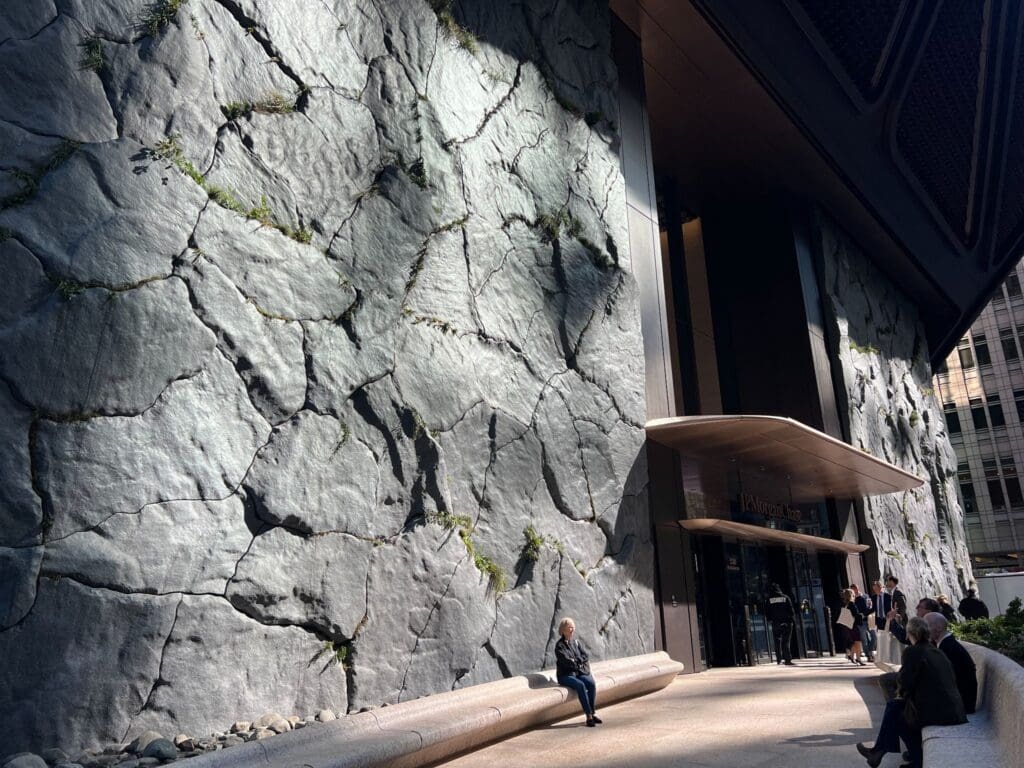
Quarra does not specialize in commodity countertops; it focuses on complex architectural stone. Still, the same industry includes residential countertops, commercial interiors, and custom pieces.
Design Freedom and Precision
Digital workflows make curves, non-repeating patterns, nice sightlines, and clean reveals easier to achieve. Custom stone furniture, such as tabletops and fireplaces, can be crafted from various stone materials, providing a unique and luxurious touch to interiors.
Schedule Predictability and Cost Control
Once approved, multiple fabricators and machines can run in parallel. Slab optimization reduces waste, and coordinated models reduce field surprises that exceed budget.
Sustainability and Responsible Use of Stone
Less waste means more responsible use of quarry resources. Regional stone can reduce shipping, while thinner assemblies may reduce structural demand.
Digital Stone in the Context of the Digital Age Construction Site
Stone is no longer outside the digital world of BIM, laser layout, drones, and reality capture. Even binary digits, not paper alone, now guide heavy materials into built architecture. AI-driven automation, multi-axis robotics, and adaptive machining are advancing digital fabrication for stone.
Coordination with Other Trades and Systems
Stone models must align with steel, insulation, waterproofing, glass, expansion joints, and differential movement. Regular coordination lets clients add corrections before anything is built.
Heritage Preservation Meets Digital Technology
For a Midwest courthouse, cathedral, or campus building, scanning can capture eroded ornament, digitally repair it, and rough out replacement stone for hand finishing. The archive helps the community learn from the work later.
Q&A: Practical Questions About Digital Stone Fabrication
How early should we involve a digital stone fabricator like Quarra Stone in our project?
Schematic design or early design development is best. Early contact helps align geometry, anchorage, stone selection, schedule, and digital deliverables.
Does digital stone fabrication cost more than traditional methods?
The equipment is costly, but the total installed cost can drop through less waste, less rework, and less field labor. Complex work often becomes practical only through digital methods.
What kind of tolerances can digital stone fabrication achieve?
CNC equipment can hold sub-millimeter accuracy, but facade tolerance also depends on anchors, substrate, and movement. Mockups prove the strategy.
Can digital fabrication handle unique, non-repetitive stone pieces?
Yes. Parametric models can create hundreds of unique parts, each linked to a location for packing and installation.
How does digital stone fabrication support long-term maintenance and future alterations?
As-built data records stone type, finish, anchors, and locations, making future repairs easier for institutions.
