

Key Takeaways
- Vals quartzite cladding is valued because it combines natural beauty, exceptional weather resistance, low porosity, and lasting durability in demanding exterior applications.
- Vals Quartzite, also known as mica quartzite, is a dense natural stone from the Swiss Alps formed over millions of years, offering stronger long-term performance than many manufactured stone veneer options.
- Quarra Stone in Sun Prairie, Wisconsin, has deep experience sourcing, fabricating, and coordinating Vals quartzite for complex exterior facades across North America.
- Realistic lead time for imported Vals quartzite cladding typically ranges from several weeks to a few months, and can vary depending on quarry schedule, fabrication complexity, finish, shipping method, and project scope.
- This guide answers practical questions about cost, detailing, installation, sustainability, and how to use Vals quartzite in your next project.
Introduction: Vals Quartzite and the Appeal of Exterior Cladding
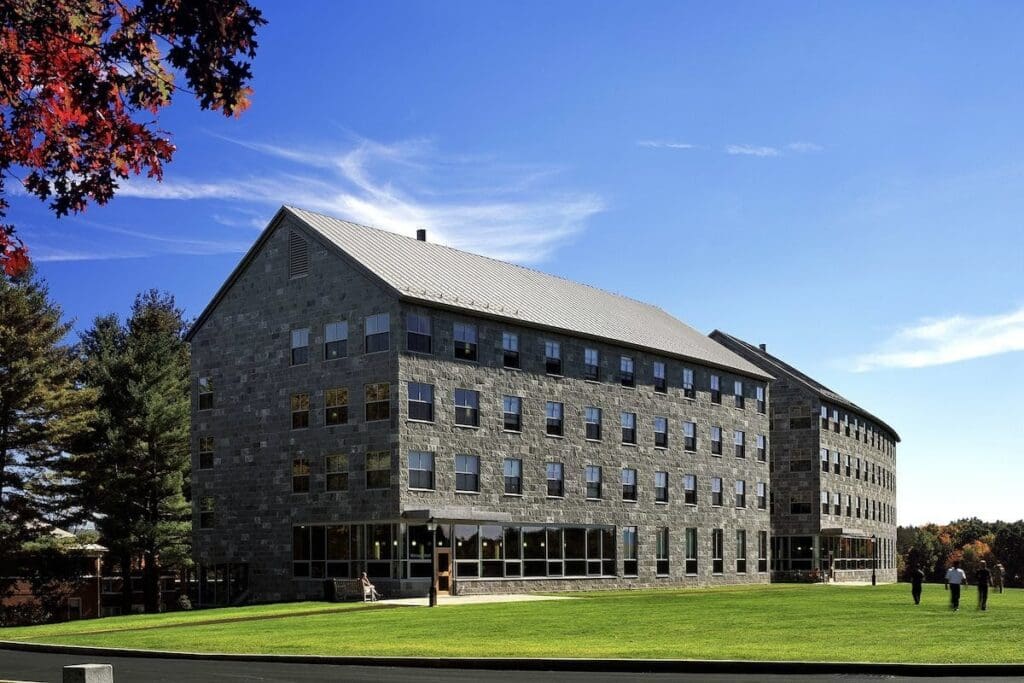
Vals Quartzite is sourced from the Vals valley of the Swiss Alps, where pressure, time, and mineral movement created a stone with unusual strength and refined beauty. Today, it appears on exterior walls, civic spaces, hospitality projects, and high-end homes where designers want a façade with depth instead of a flat applied finish.
That is the difference between real stone and generic manufactured stone veneer. A cast veneer can copy color, but it cannot reproduce the mineral structure, reflective qualities, veining, or timeless quality of quarried natural stone.
The material became internationally recognized through Peter Zumthor’s 1996 Therme Vals project, where layered stone gave the building its quiet, monolithic presence. This article focuses on Vals quartzite cladding for exterior walls, not countertops or interior-only uses.
Quarra Stone and Asymmetric Applications are Wisconsin-based teams writing for architects, builders, and owners who need practical guidance on specifying this material for North American façades.
A Stone Born in the Swiss Alps: What Makes Vals Quartzite Different
Vals Quartzite is quarried in Vals, Graubünden, Switzerland, from a limited alpine source associated with the traditional Vals stone industry. Geologically, it is often described as a mica-rich quartzite or gneiss, with quartz, feldspar, and mica compressed into a compact, layered structure. In plain language, that structure is what makes Vals quartzite stronger, denser, and more dimensionally stable than many decorative cladding products.
Vals Quartzite, also known as mica quartzite, is characterized by its fine-veined texture and a captivating color palette that includes shades of gray, blue, and green, contributing to its unique aesthetic appeal. Its distinct fine-veined texture can look quiet in shade and more animated in direct light. Morning sun, evening light, rain, and snow all reveal different reflective qualities in the same wall surface.
Compared with limestone, softer sandstone, concrete-based veneer, and many other materials, Vals Quartzite offers a tighter mineral fabric and lower moisture uptake. The alpine origin also matters. A stone formed and tested in snow, ice, and temperature swings is naturally aligned with exterior climates such as Wisconsin, New England, the Mountain West, and Canada.
Because the quarry area is limited, the material has a consistent character but finite annual extraction. That adds to its prestige, but it also means planning is important. Every panel has natural variation, so individual pieces avoid the repetitive patterning often seen in cast stone veneer.
Why Vals Quartzite Excels as Exterior Cladding
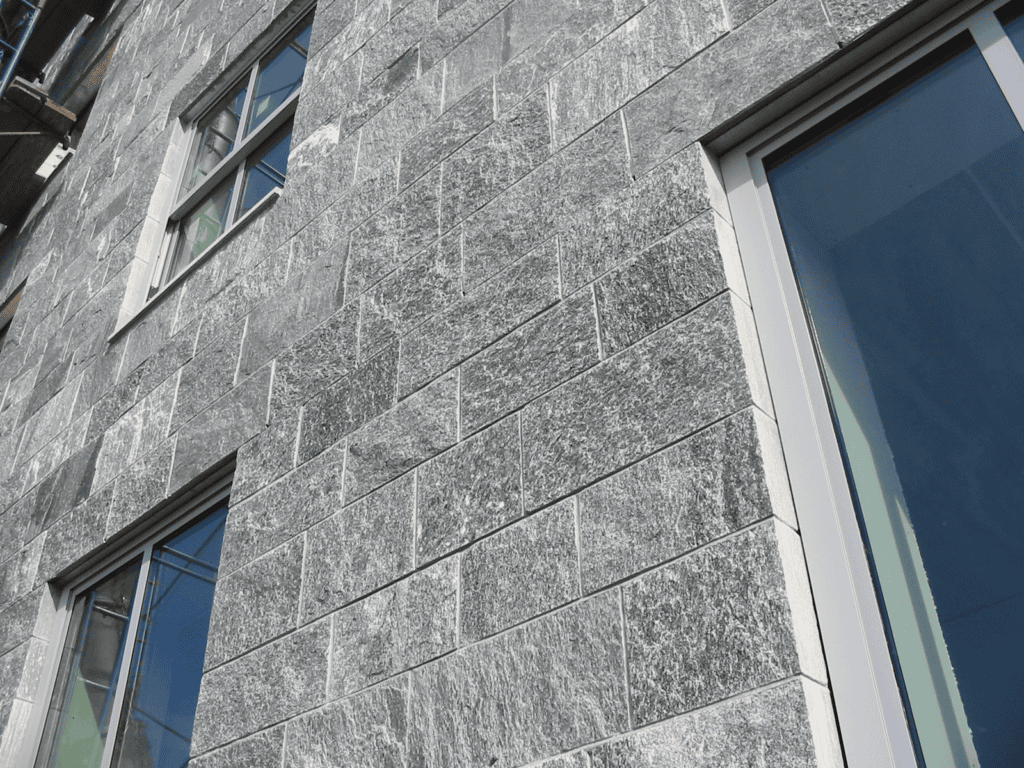
The core argument for Vals quartzite cladding is simple: it gives architects the aesthetic appeal of a versatile natural stone while performing like a serious building-envelope material.
Here are the main advantages.
- The stone has a low water absorption rate of 0.8%, which contributes to its durability and resistance to weathering and degradation over time.
- Vals Quartzite has a high compressive strength of 281 N/mm2, indicating its ability to withstand significant weight and pressure, which enhances its durability in high-traffic areas.
- Vals Quartzite has a low water absorption rate of 0.8% and a high density of 2730 kg/m3, which contributes to its strength and makes it suitable for demanding environments.
- The density of Vals Quartzite is approximately 2730 kg/m3, which contributes to its strength and durability, making it a preferred choice over lighter stones in high-traffic areas.
This compact and solid structure ensures exceptional durability, making it resistant to wear and tear, which is essential for both interior and exterior applications. The stone’s durability and resistance to freeze-thaw cycles make it ideal for high-traffic areas and public spaces, such as city plazas and transit hubs.
Vals Quartzite is known for its exceptional durability and weather resistance, making it suitable for both interior and exterior applications, outperforming many other natural stones in harsh climates. Vals Quartzite exhibits a low water absorption rate of 0.8%, which enhances its performance in freeze-thaw cycles compared to other natural stones that may be more porous and susceptible to damage.
Some technical references also cite that Vals quartzite has a water absorption rate of approximately 0.25%, protecting facades from moisture erosion, salt, and acid rain. Test methods and reported values can differ, but both figures point in the same direction: low porosity and strong exterior performance.
The low porosity of Vals quartzite allows it to effectively serve as an external facade that protects against wind, rain, and UV rays. It is naturally resistant to acids, salt, and intense heat, which prevents degradation in harsh environments.
There is also an energy-performance argument. Vals quartzite functions well as a thermal regulator, improving overall energy efficiency in buildings. The impressive thermal mass of Vals Quartzite helps regulate indoor temperatures, supporting energy efficiency and contributing to a more sustainable lifestyle. That does not replace insulation or air sealing, but it can support more stable wall temperatures when used in a well-designed assembly.
Vals Quartzite is an environmentally responsible choice due to its inherent durability, which requires minimal maintenance and reduces the need for frequent replacements, thereby minimizing long-term environmental impact. By integrating Vals Quartzite into architectural projects, designers can create spaces that are both aesthetically pleasing and environmentally responsible, reflecting a commitment to sustainability.
Maintenance is straightforward. Unlike painted panels or faux stone products, the color and texture are not surface coatings. In most conditions, the stone needs periodic rinsing, non-acidic cleaners, and inspection of joints and anchors.
Design Possibilities: From Monolithic Walls to Refined Stone Veneer
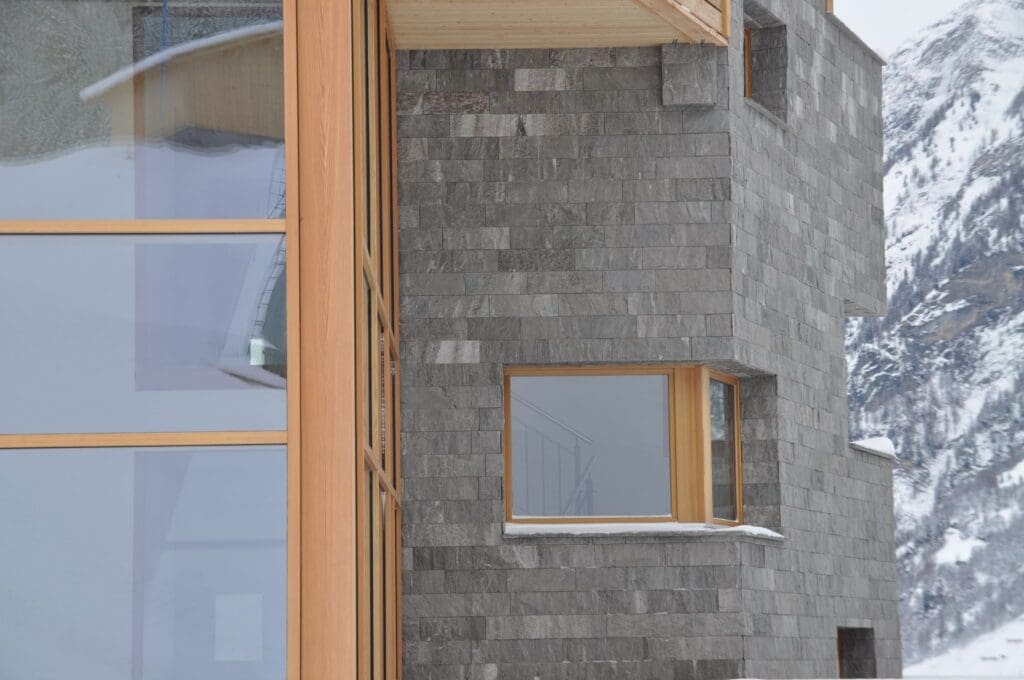
Vals quartzite can be used as full-bed masonry, anchored stone veneer, thin wall panels, or a custom panel system, depending on the structure, budget, and desired shadow line.
Quarra Stone commonly works with stone profiles ranging from horizontal coursing inspired by Therme Vals to ashlar layouts, precision-cut panels, and rainscreen assemblies. The material can be fabricated with minimal thickness for some engineered systems, but thickness, weight, anchorage, and wind loads must always be reviewed together.
Vals Quartzite is suitable for a wide range of architectural and design applications, including exterior facades, pavers, cladding, interior flooring, countertops, wall panels, and furniture. It is commonly used in both exterior and interior applications to enhance structural performance and visual appeal. Designers also use it for fireplaces, columns, retaining walls, paving, and even an outdoor space feature such as a stone fire pit.
Vals quartzite adds natural texture and depth to luxury living spaces and commercial environments. Due to its low water absorption, Vals quartzite is highly practical in moisture-rich environments like bathrooms and pools.
Its aesthetic allows for architectural depth when used in mixed finishes, creating deep shadows and patterns. Vals quartzite is versatile in processing, allowing for different cuts and finishes, including vein-cut and fleuri-cut, as well as honed and split-face surfaces. A polished surface finish increases reflectivity, while honed, sandblasted, splitface, or bush-hammered finishes reduce glare and bring out texture.
Vals Quartzite’s unique color palette and reflective qualities enhance both interior and exterior spaces, making it a popular choice among architects and designers for projects that demand aesthetic appeal and performance. Its elegance works especially well beside glass, bronze-toned metal, blackened steel, wood, and board-formed concrete.
Planning and Lead Time: Bringing Vals Quartzite to Your Next Project
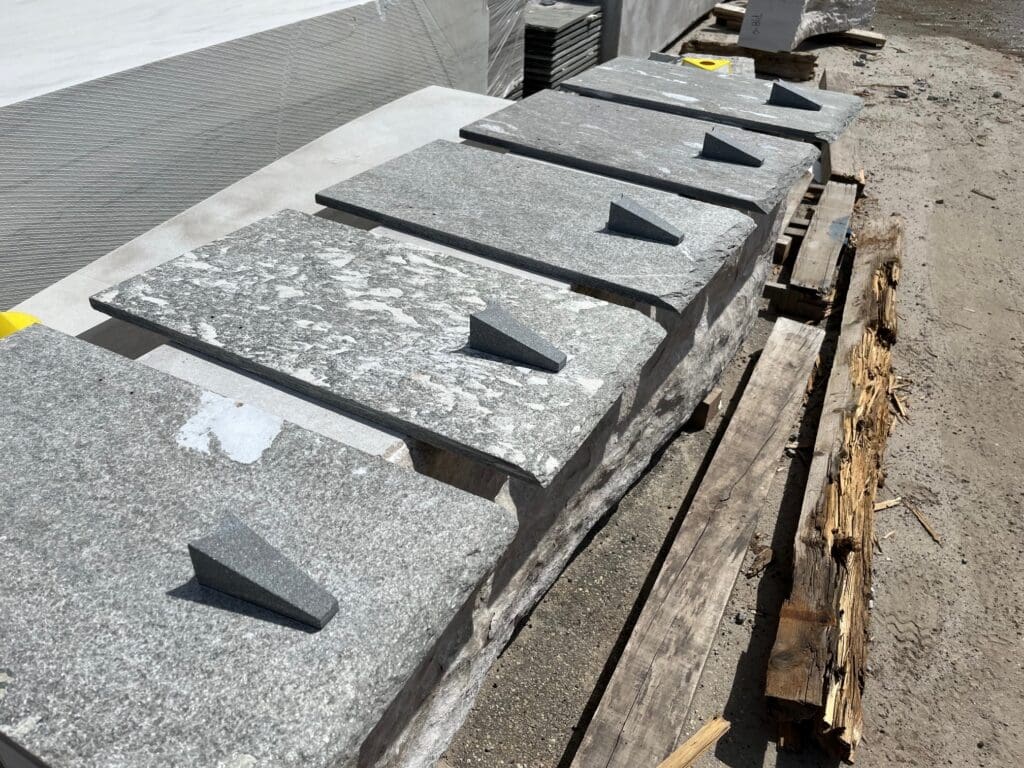
Vals Quartzite is not a warehouse commodity with a regular price that applies to every elevation. It is quarried, selected, cut, finished, packed, shipped, and coordinated for a specific project. That process is one reason the finished façade feels so intentional.
For smaller residential accent areas, sampling, fabrication, and delivery may take several weeks after approvals if material and production capacity are available. For medium residential or commercial projects, plan for a few months. For large civic, institutional, or multi-building commercial projects, the full path from design approval to site delivery can extend several months or more.
A typical Quarra Stone process includes:
- stone selection and physical samples
- quarry allocation and block review
- shop drawings and coordination with the design team
- fabrication, finishing, and dry-lay review when needed
- packing for overseas transport
- customs and inland freight
- site delivery and installation coordination
Winter weather in the Swiss Alps, quarry schedule, customs logistics, and the need to match other natural stone on the same façade can all affect lead time. The practical move is to bring Quarra Stone into the conversation during schematic design or early design development, not after bid documents are complete.
If your next project requires a custom pattern, unusual panel sizes, or matching across multiple phases, early coordination protects both budget and visual consistency.
Installation Considerations and Wall System Performance
Vals quartzite is durable, but the stone itself is not the waterproofing layer. Performance depends on the complete cladding assembly.
In North America, common approaches include anchored stone veneer over concrete or masonry backup and ventilated rainscreen cladding over framed walls. The right system depends on building height, wind load, seismic criteria, insulation strategy, fire requirements, and desired joint expression.
Key technical points include anchor type, corrosion resistance, panel thickness, movement joints, drainage, tolerances, and backup-wall flatness. Stainless steel or other appropriate corrosion-resistant anchors are especially important where de-icing salts, coastal air, or heavy moisture are present near grade.
The weight of Vals Quartzite is an asset for durability, but design must take that weight into account. Treating it like lightweight siding or generic faux stone panels is a mistake. A qualified installer and fabricator should coordinate joint widths, support points, edge conditions, transitions to windows, and interfaces with air-barrier and flashing trades.
Cold and mixed climates add their own challenges. Ice, salt, thermal movement, and wind-driven rain can expose weak detailing. Proper drainage, open joints where appropriate, ventilation, and well-sequenced installation help the cladding perform as intended.
Q&A: Practical Questions About Vals Quartzite Cladding
Quarra Stone often receives the same practical questions from architects, GCs, and owners evaluating vals quartzite cladding.
How does Vals quartzite compare to manufactured stone veneer?
Vals quartzite costs more upfront than manufactured stone veneer, but the comparison should include lifespan, maintenance, prestige, and replacement risk. Manufactured veneer is usually lighter and cheaper, but it relies on pigments, molds, and cementitious materials. Vals quartzite is a real stone with inherent color, mineral depth, and long-term performance.
For high-end architectural and design projects, the perceived value is also different. Natural cladding carries a sophisticated touch that manufactured products rarely match.
Is there a minimum project size that makes sense?
There is no universal minimum, but economics improve as the project gets larger. Small residential features, garden walls, fireplaces, or accent cladding areas can work if the owner values the material. Larger commercial projects and civic facades absorb sampling, freight, and fabrication costs more efficiently.
How much color and lot variation should I expect?
Expect natural variation in grey tone, mica movement, blue-green undertones, and veining. Mockups and sample walls help teams see the range before full production. Quarra Stone can help manage consistency by reviewing material, coordinating lots, and planning shipment sequences.
Is Vals quartzite sustainable if it is imported?
Yes, when evaluated over a long service life. Swiss quarry practices are closely regulated, and the material’s durability reduces replacement cycles. Shipping has an environmental cost, but the long lifespan, minimal maintenance, and potential reuse value support sustainability goals.
How should other trades coordinate with the stone package?
Window installers, air-barrier contractors, metal panel suppliers, structural engineers, and the cladding installer should coordinate early. The stone dimensions, anchors, flashing, and movement joints affect the whole wall assembly.
FAQ: Additional Details on Vals Quartzite Exterior Cladding
How should I maintain Vals quartzite exterior cladding over the decades?
Routine care is simple. Rinse the surface with water, use pH-neutral stone cleaners when necessary, and avoid harsh acids, wire brushes, or aggressive pressure washing.
Sealing is project-specific. A breathable stone sealer may be appropriate for polluted urban façades, coastal exposures, or areas near de-icing salts. In many standard exterior conditions, sealing may be unnecessary.
Owners should include anchors, sealants, joints, and flashing in regular building-envelope inspections. Under normal conditions, Vals quartzite requires less intensive care than many manufactured products because the color and texture are inherent to the stone, not applied as a coating.
Is Vals quartzite suitable for harsh climates and coastal environments?
Yes, with proper detailing. Its freeze-thaw resistance, low porosity, density, and alpine origin make it suitable for snow, ice, and demanding exterior exposure.
Coastal projects need additional attention to salt spray, wind-driven rain, and corrosion-resistant hardware. The stone may be strong, but the wall system must also be designed for the local exposure.
Vals quartzite has been used successfully for exterior cladding in cold continental and maritime climates in Europe and North America. Design teams should share climate data, site exposure, and project location with Quarra Stone early so the assembly can be tuned to the conditions.
Can I see and feel Vals quartzite before committing to it for my façade?
Yes. Architects, owners, and contractors can request physical samples from Quarra Stone, typically small cut pieces that represent the selected finish.
For key projects, larger mockup panels can be fabricated so the team can review coursing, joint patterns, surface finish, and hardware alignment before full production. Viewing samples in natural daylight, both dry and wet, is important because the stone changes with light and weather.
Sample lead time is shorter than a full cladding order, but it should still be built into early design schedules.
How far in advance should I plan if I want Vals quartzite on my next project?
Start during schematic design or early design development. Early conversations help reserve quarry capacity, shape realistic details, and prevent late-stage redesign.
A typical path includes design review, samples, mockups, shop drawings, quarrying, fabrication, shipping, and site installation. Smaller residential cladding areas can often move faster if the quarry schedule allows. Larger institutional or civic projects may require many months of coordinated work.
The best first step is to share preliminary elevations, target completion dates, desired finishes, and performance criteria.
Who should I contact to discuss Vals quartzite cladding details and pricing?
Inquiries for Vals quartzite exterior cladding should be directed to Quarra Stone in Sun Prairie, Wisconsin. Quarra Stone specializes in custom-cut natural stone façades for North American projects and can advise on budget, lead time, fabrication, installation coordination, and detailing.
When publishing this page, include Quarra Stone’s current phone and email contact information. Design professionals should share drawings, 3D models, finish goals, and performance requirements for a more accurate response.
Asymmetric Applications supports content and communication strategy, while Quarra Stone provides the stone, engineering coordination, and fabrication expertise.
If the goal is a façade with natural beauty, durability, and quiet architectural confidence, Vals quartzite belongs on the shortlist.
