

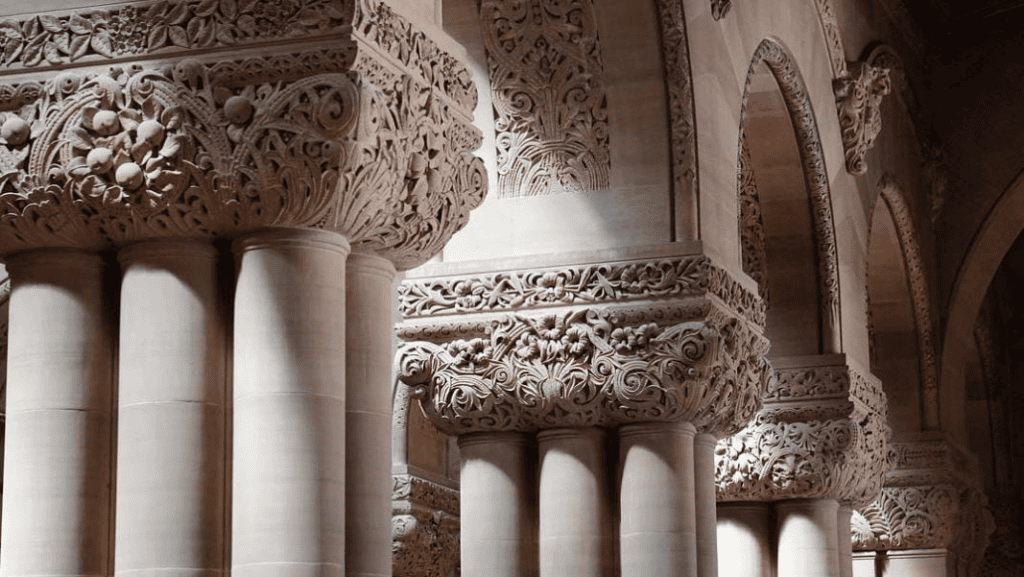
This guide clarifies what natural stone is, how it performs, and where it fits in 2026 building projects. Whether you’re designing a civic landmark or a luxury home, understanding this material helps you make better decisions.
Key Takeaways
- Natural stone (granite, marble, limestone, quartzite, sandstone, and more) is quarried from the earth and valued for durability, unique appearance, and service life often exceeding a century in civic, institutional, and residential work.
- Quarra Stone Company specializes in high-precision architectural stonework, combining digital fabrication with traditional hand carving for projects ranging from the U.S. Capitol to private estates.
- Choosing the right stone involves balancing performance factors like weathering resistance and slip resistance with maintenance needs and design intent—not just color and price.
- Early collaboration with a stone fabricator prevents costly redesigns and ensures your project meets budget, schedule, and performance goals.
What Is Natural Stone?
Natural stone refers to solid rock—granite, marble, limestone, sandstone, quartzite, slate, and others—extracted from quarries and finished for building and art without synthetic binders.
- From quarry to finished piece: Blocks are extracted using wire saws or drills, then cut into slabs typically 2-3 cm thick. Digital modeling guides CNC or robotic shaping, followed by hand finishing for precise architectural fits.
- Not the same as engineered stone: Quartz composites are factory-made from crushed stone bound with polymer resins. Natural stone derives its veining and color from geologic processes spanning millions of years—no two pieces are identical.
- Proven performance: Indiana limestone appears on early 20th-century university campuses and the Empire State Building, still performing after a century. Vals Quartzite from Switzerland has demonstrated exceptional freeze-thaw durability in alpine climates since the 1990s. Barre granite in U.S. federal courthouses delivers compressive strength exceeding 19,000 psi.
Common Types of Natural Stone Used in Architecture
Different stones suit different applications. Mineral makeup and porosity drive performance for facades, paving, interiors, and sculpture.
- Granite: Very hard (Mohs 6-7), low porosity under 1%. Ideal for exterior paving, steps, and heavy-use countertops.
- Marble: Scores 3-4 on Mohs scale. Classic for sculpture and interior cladding; takes a high polish but needs sealing in acidic environments.
- Limestone: Higher porosity (5-20%), favored for facades and institutional buildings like the U.S. Capitol. The stone we put into the US Capitol was sandstone, FWIW.
- Sandstone: Common in historic masonry and paving; hardness varies (4-7).
- Quartzite: Very dense, abrasion-resistant (Mohs 7). Ideal for cladding and kitchen worktops with heat resistance up to 600°F.
- Slate: Splits into thin sheets for roofing and flooring; valued for slip resistance.
- Vals Quartzite: Tight grain, gray tonal range, used in high-end civic and residential projects worldwide since Peter Zumthor’s 1996 Therme Vals spa.
Key quarry regions include Carrara, Italy for marble; Vals, Switzerland for quartzite; and Indiana and Vermont in the U.S. for limestone and granite.
Natural Stone vs. Engineered Materials
Architects and builders often compare natural stone to engineered quartz, concrete, or ceramics. The choice depends on performance, aesthetics, and lifecycle costs.
- Durability: Natural stone offers UV stability outdoors and potential for centuries of service. Engineered composites may degrade from resin breakdown under UV or heat above 300°F.
- Appearance: Unique veining in natural stone creates dynamic patterns impossible in uniform quartz slabs—important for large-scale cladding or lobby floors.
- Maintenance: Many natural stones benefit from periodic sealing (every 1-3 years for marble), while dense granites and quartzites may need minimal treatment.

Digital Stone Fabrication and Design Freedom
Since the early 2000s, digital tools have transformed natural stone fabrication. 3D modeling, CNC machining, and industrial robots enable complex geometries that were once too slow or expensive.
CNC and robotic milling use computer-guided diamond tools to cut and shape stone blocks following digital models. Quarra translates architects’ 3D files from software into facade panels, deep reliefs, and freeform sculptures, drawing on over 30 years of custom architectural and artistic stone experience.
Digital fabrication doesn’t replace craftsmanship—it shortens rough-shaping time so master carvers can focus on fine detail and surface finishing.
Traditional Hand Carving and Historic Restoration
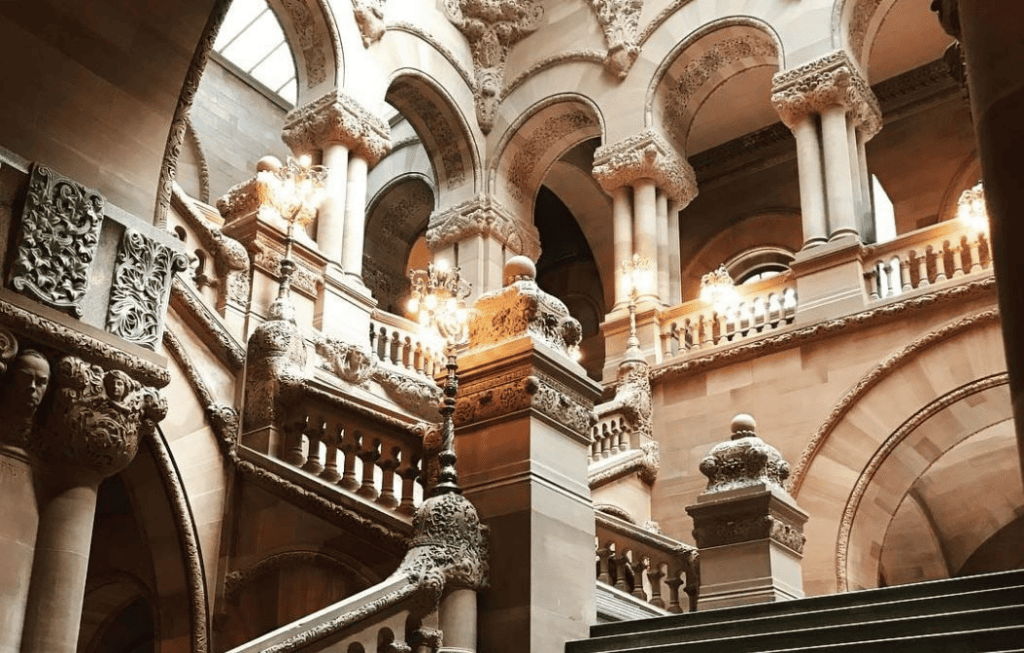
Centuries-old methods—chisels, mallets, and fine tooling—remain essential for restoration and fine art. Hand carving replicates historic details like capitals, tracery, and moldings for buildings from the late 1800s and early 1900s.
Quarra’s work on historically significant structures requires new stone that visually blends with the original work, supported by decades of expertise in sculpture, cladding, and restoration. Carvers use archival drawings, on-site rubbings, and digital scans of surviving fragments to recreate missing pieces.
Stone Sourcing, Quarrying, and Sustainability
Responsible quarrying and long service life make natural stone a strong candidate for low-carbon construction. Stone requires no chemical binders or high-temperature kilns once quarried, and water recycling in cutting achieves 90% reuse rates.
Many 19th-century stone buildings remain in service with only limited repair after 100+ years. Salvaged stone can be recut for new landscape features or interior walls, reducing waste by 40% in some cases. Environmental product declarations (EPDs) from quarries support green building standards like LEED.
Applications of Natural Stone in Modern Projects
Natural stone appears across building types for residential and commercial properties: museums, universities, government buildings, and high-end residences.
- Exterior uses: Facades, rainscreens, plinths, monumental stairs, plazas, and landscape features
- Interior uses: Lobby walls and floors, staircases, fireplaces, bathroom cladding, and reception desks
- Fine art: Free-standing sculptures, relief panels, and memorials using digital milling combined with hand finishing
Vals Quartzite excels in cold-climate cladding, pool surrounds, and heavily trafficked floors. Quarra collaborates with designers to integrate it into custom large panels and three-dimensional pieces.
Care, Maintenance, and Long-Term Stewardship
Natural stone is low-maintenance when matched correctly to its environment. Routine care includes dust mopping interior floors and using pH-neutral cleaners. Avoid harsh acids on calcite-based stones like marble.
Many limestones and marbles benefit from penetrating sealers applied at installation and renewed every few years. Dense granites and quartzites may need little sealing. Quarra provides maintenance guidelines tailored to specific stone, finish, and building location.
Why Work with Quarra Stone Company
Quarra Stone Company specializes in complex, high-visibility natural stone projects demanding both technical precision and artistic judgment, and its expanding Sun Prairie, Wisconsin production facility supports larger and more complex work. With global quarry relationships, in-house digital fabrication, traditional carving studios, and experienced project management teams active since the early 1990s, Quarra serves as consultant and fabricator.
Contact Quarra’s team to discuss upcoming projects, review digital models, or request samples and technical data.

Frequently Asked Questions About Natural Stone
These FAQs address practical questions for project teams planning real-world work, covering topics like lead times, costs, and coordination.
How far in advance should natural stone be selected for a major project?
For large civic, institutional, or campus buildings, stone selection ideally begins 12-18 months before expert installation. This allows time for quarry sampling, mockups, approvals, fabrication, and shipping. Smaller residential or interior projects often require 3-6 months, though complex digital fabrication or imported stone may extend timelines. Early selection helps secure consistent blocks from the same quarry area, reducing variation between phases.
What factors have the biggest impact on natural stone cost?
Key cost drivers include the rarity of the stone, the quarry location, the yield of usable blocks, the thickness and finish type (such as polished, honed, or textured), the complexity of the shapes required, and the difficulty of installation. Simple panels made from common stones may have costs comparable to high-end manufactured materials, while deeply carved or intricate elements typically carry a premium price. Early collaboration with Quarra Stone can help identify cost-effective alternatives that maintain the original design intent.
Is natural stone safe for indoor air quality?
Natural stone is a stable, non-combustible material that does not emit harmful volatile organic compounds (VOCs), making it an excellent choice for healthy indoor environments. To maintain good air quality, choose sealers and adhesives that have low VOC levels. When properly cared for, stone surfaces are easy to clean, which is especially important in healthcare, education, and other high-traffic public spaces.
Can natural stone be used in cold climates with freeze-thaw cycles?
Many stones—select granites, quartzites, and certain limestones—perform very well in freeze-thaw conditions when properly selected and detailed. Avoid highly porous or weak stones for exterior paving in climates with de-icing salts unless tests confirm suitability. Quarra provides test data and detailing advice for drainage, slope, and joint design to ensure long-term performance.
What information should I share with a stone fabricator at project start?
Share the project location and its climate—the environmental conditions where the building or project is situated—along with building type and expected traffic, desired stone appearance, budget targets, critical dates, and any performance standards being pursued. Include preliminary drawings or 3D models and known constraints on structure or anchoring. The more complete the initial information, the more precise Quarra’s recommendations on stone type, fabrication approach, and schedule.
